Our Model
How dignity and stability are built over time — forming the foundation for care, health, growth, and readiness for work.
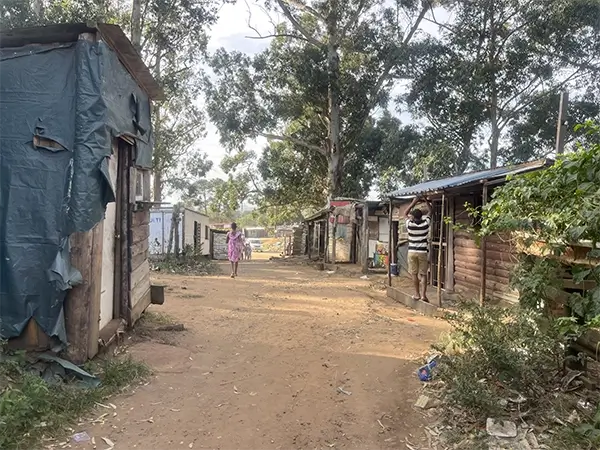
Abounding Hope operates as a connected community growth platform rooted in long‑term presence within this informal settlement of the Ray Nkonyeni Municipality — where dignity, stability, and care must come before opportunity.
Through years of working alongside families facing poverty, illness, and unemployment, we have learned that lasting change does not come from isolated programmes.
It comes from stable environments, consistent support, and shared responsibility, sustained over time.
What Comes Before Opportunity
Employment does not sit at the beginning of a person’s journey.
Long before someone can succeed at work, their life is shaped by access to food, health, care, routine, and support during crisis.
When these foundations are unstable, training and placement become fragile — regardless of motivation.
Readiness for work is formed in everyday life.
A Connected System
Abounding Hope has intentionally evolved as a system of interconnected environments rather than independent projects.
Each environment responds to a real, observed need within the community and strengthens the others.
Not every person moves through every part of the system — but the system exists together, holding people at different stages of vulnerability and growth.
Some environments sustain life.
Others prepare for work.
All are essential.
Where Stability and Readiness Are Formed
The environments below represent the foundations through which dignity, health, responsibility, and capability are developed.
They are not linear steps, but lived spaces where people participate, are supported, and grow over time.
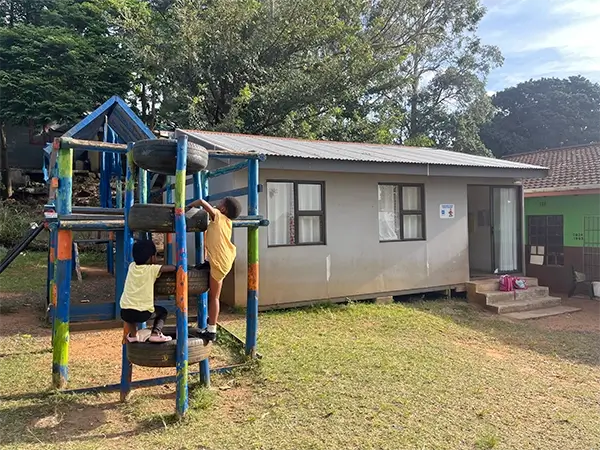
Early Childhood Care
Early childhood is where stability first takes root.
Through consistent care, routine, nutrition, and early learning, children are given the foundations they need to grow despite the instability of informal settlement life.
This environment also supports parents and caregivers, strengthening households and creating long‑term ripple effects across the community.
Nutritional Support
Consistent access to a daily meal is a foundational requirement for health, dignity, and participation in community life.
Abounding Hope’s Meal Centre provides regular nutrition to vulnerable community members, including individuals living with chronic illnesses such as HIV and tuberculosis.
For many end users, this meal is not connected to skills training or employment pathways. It is essential for safe adherence to life‑saving medication.
Taking HIV and TB medication without food can lead to severe side effects, treatment interruption, and increased risk of drug resistance.
By ensuring access to a reliable meal, this environment stabilises health, preserves dignity, and allows individuals to remain present in family and community life.
It sustains life today, while protecting future possibility.
Community Care
Community care exists to protect progress when life becomes unstable.
Families in informal settlements regularly face crisis through illness, loss of income, disaster, or household breakdown.
Through home‑based support, food assistance, and social care, this environment helps households recover and remain connected to the wider system, rather than falling back into isolation.
Youth Development
Before skills training can be effective, young people need structure, guidance, and responsibility.
Youth development focuses on mentoring, discipline, decision‑making, and confidence — helping young people form identity and direction in environments where opportunity is limited.
This groundwork shapes mindset and behaviour long before employment or training becomes viable.
Skills Development
Skills development is intentionally placed within the broader system.
Because foundations of care, nutrition, and stability are already in place, individuals entering skills development do so with greater readiness, routine, and accountability.
This increases the likelihood that skills translate into sustained participation, meaningful work, and long‑term independence.
In practice, this system supports:
Over 20,000 meals provided each year
Over 100 children supported each month
Ongoing support to individuals and families through care, nutrition, and community engagement
This is not the result of a single intervention.
It reflects the strength of a connected system operating over time.
From Stability to Capability
When people live within environments that provide care, routine, health, and responsibility, the ability to participate in work begins to emerge naturally.
By the time individuals are ready to engage in job‑specific preparation, they are not starting from crisis — but from stability.
Employment is not introduced early.
It arrives when the groundwork is strong enough to hold it.
See how readiness is intentionally developed into employability through structured skills pathways and support.